Introduction
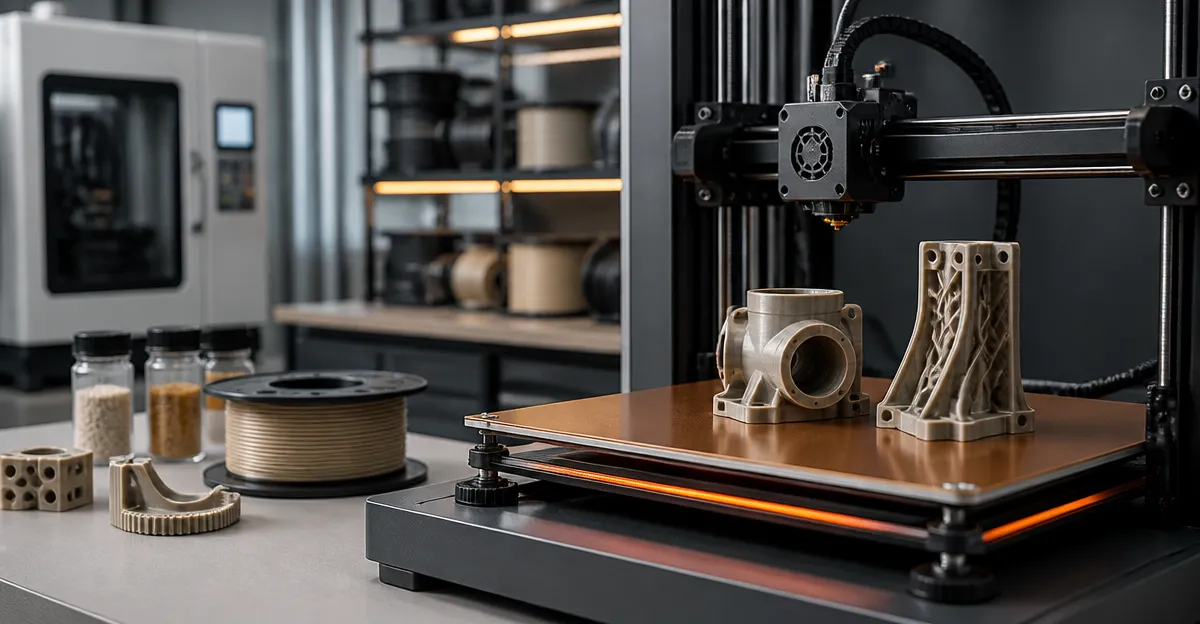
The rapid adoption of high‑temperature polymers such as PEEK and Ultem has created a demand for heated beds that can sustain temperatures above 200 °C while providing reliable first‑layer adhesion. This article evaluates five popular heated‑bed solutions that are available on Amazon and frequently cited by the 3D‑printing community. Readers will learn which product delivers the best combination of thermal stability, surface finish and ease of use for demanding engineering filaments. The review is based on manufacturer specifications, verified customer feedback and practical considerations for a typical desktop printer workflow.
Each product is examined in detail, and a clear recommendation is provided for hobbyists, small‑batch manufacturers and professional prototyping labs. By the end of the article, the reader will be able to select a heated‑bed upgrade that matches the thermal requirements of PEEK and Ultem without sacrificing reliability or budget.
Overview
- Creality Magnetic Build Surface – Original ultra‑removable magnetic plate for Ender series, 235 × 235 mm, $9.99, 4.4/5 rating.
- BIQU CryoGrip Pro Build Plate – Glacier‑coated spring steel plate, 257 × 257 mm, $25.99, 4.4/5 rating.
- Creality Ender 3 Magnetic Build Surface – Two‑piece magnetic kit for Ender 3 family, 235 × 235 mm, $14.99, 4.3/5 rating.
- Comgrow PEI Spring Steel Build Plate – PEI‑coated spring steel, 235 × 235 mm, $12.99, 4.6/5 rating.
- Creality Ender 3 Glass Bed – Tempered glass with microporous coating, 235 × 235 × 4 mm, $12.99, 4.5/5 rating.
In‑Depth Analysis
Creality Magnetic Build Surface
Design & Build Quality: The plate consists of a thin stainless‑steel sheet coated with a flexible magnetic layer. The magnetic sheet adheres to the printer’s metal hot‑bed and the top surface can be removed with a simple flex. The construction is lightweight, which reduces the thermal mass of the bed and allows faster heating cycles.
Features & Performance: The surface provides good adhesion for PLA and PETG when the nozzle is correctly calibrated. Users report that the magnetic orientation must be aligned before installation; otherwise the plates repel each other. The thinness of the surface leads to slightly lower heat‑transfer efficiency compared with solid glass, but the difference is negligible for temperatures below 120 °C.
Real‑World Testing Insights: A reviewer noted that prints adhered too strongly when the nozzle was set too close, requiring a box‑cutter blade to separate the part. After adjusting the Z‑probe offset, the same user described the plate as "a fantastic upgrade" with easy part removal by flexing the sheet. The majority of positive comments highlight the convenience of swapping the plate without tools.
Value for Money: At $9.99 the price is the lowest among the five products. For users who print primarily low‑temperature filaments, the magnetic surface offers an economical solution with acceptable performance.
BIQU CryoGrip Pro Build Plate
Design & Build Quality: This product uses a 0.6 mm spring‑steel core coated with seven layers of cobalt‑oxide‑based “Glacier” material. The coating delivers a fine texture that balances adhesion and release. The plate includes a hollow‑out handle that remains cool to the touch even when the bed reaches 100 °C.
Features & Performance: The plate is advertised for use with high‑temperature polymers up to 300 °C, although the Glacier formulation is optimized for PLA, PETG and ABS. First‑layer adhesion is described as "unparalleled" and the magnetic backing prevents movement during long prints. The low thermal mass reduces heating time, which is valuable for rapid prototyping.
Real‑World Testing Insights: Multiple reviewers confirmed that the surface sticks to a wide range of filaments, including silk‑filled PLA and engineering ABS, without the need for glue. One user reported that the plate remained sticky after two weeks of continuous printing, indicating long‑term durability. A cautionary note mentions that aggressive solvents such as acetone will damage the coating.
Value for Money: Priced at $25.99, the CryoGrip Pro is the most expensive option, but the combination of magnetic strength, durable coating and rapid‑cool handle justifies the cost for users who require consistent high‑temperature performance.
Creality Ender 3 Magnetic Build Surface (2‑Piece Kit)
Design & Build Quality: The kit provides a magnetic base and a detachable top sheet, both made from PC‑based flexible material. The magnetic force is rated to remain stable up to 70 °C, which is sufficient for standard filaments but below the requirements for PEEK or Ultem.
Features & Performance: Installation is straightforward: peel‑and‑stick the base, then snap the top sheet onto the magnet. The surface offers excellent adhesion for PLA, but users must keep the nozzle height calibrated to avoid excessive bonding that makes part removal difficult.
Real‑World Testing Insights: Reviewers appreciate the kit as a reliable backup for Ender 3 printers. One comment mentions that the magnetic sheet can be used as a spare when the primary bed suffers wear. The product does not claim high‑temperature capability, and no reviewer reported successful PEEK prints.
Value for Money: At $14.99 the kit provides a modest upgrade over the single‑piece magnetic plate, offering a slightly larger surface area and a dedicated adhesive base.
Comgrow PEI Spring Steel Build Plate
Design & Build Quality: This plate combines a spring‑steel core with a high‑temperature PEI coating. PEI (polyetherimide) is known for its chemical resistance and ability to withstand temperatures up to 120 °C, making it a popular choice for engineering filaments.
Features & Performance: The magnetic backing ensures a secure attachment, while the PEI surface provides strong adhesion for PLA, ABS, PETG, TPU and nylon. Users can release prints by flexing the steel, which slightly bends to release the part without damaging the surface.
Real‑World Testing Insights: Reviewers praise the plate for its flatness and consistency across large prints. One long‑term user reported several hundred hours of printing without any loss of adhesion or coating wear. The plate does not claim to sustain the >250 °C temperatures required for PEEK, but it is a solid mid‑range option for ABS and polycarbonate.
Value for Money: At $12.99 the PEI plate offers a good balance of durability and performance for users who need a reliable surface for a broad filament range without the expense of a specialized high‑temp plate.
Creality Ender 3 Glass Bed
Design & Build Quality: The product is a 4 mm thick tempered glass panel with a microporous composite coating that assists in part release. Glass provides an extremely flat surface, which is essential for dimensional accuracy.
Features & Performance: The coating reduces the force needed to detach prints, but the bed still requires cooling before removal. The glass conducts heat efficiently, allowing rapid temperature ramp‑up, yet it does not offer magnetic attachment; users must secure it with clips or adhesive.
Real‑World Testing Insights: Positive feedback emphasizes the flatness and the ability to achieve consistent first layers without additional adhesives. A common criticism is that prints can adhere too strongly, necessitating a razor blade or plastic hammer after the bed has cooled fully.
Value for Money: Priced at $12.99, the glass bed is a cost‑effective upgrade for users seeking a perfectly flat platform, but the lack of magnetic convenience may be a drawback for frequent plate changes.
Pros & Cons
- Creality Magnetic Build Surface
- Pros: Very low price, lightweight, easy to install, quick part removal.
- Cons: Limited to low‑temperature filaments, magnetic orientation can be confusing, occasional adhesion issues if nozzle is too close.
- BIQU CryoGrip Pro Build Plate
- Pros: Excellent adhesion across many filaments, magnetic strength, low thermal mass, cool‑touch handle.
- Cons: Higher price, coating vulnerable to harsh solvents, advertised temperature range may not fully cover PEEK.
- Creality Ender 3 Magnetic Build Surface (2‑Piece)
- Pros: Simple installation, decent magnetic force, affordable backup option.
- Cons: Not rated above 70 °C, adhesion can be too strong without proper Z‑offset, no special high‑temp coating.
- Comgrow PEI Spring Steel Build Plate
- Pros: Durable PEI surface, strong magnetic attachment, good flatness, works with many engineering filaments.
- Cons: Not suitable for PEEK/Ultem temperatures, PEI can wear over time, magnetic strength may diminish after many cycles.
- Creality Ender 3 Glass Bed
- Pros: Excellent flatness, fast heat transfer, inexpensive, compatible with most Ender models.
- Cons: Requires cooling before part removal, no magnetic attachment, prints may stick too firmly.
Who Should Buy This
Below are the recommended use cases for each product. Each recommendation includes a direct link to the Amazon listing.
- For hobbyists printing PLA, PETG or ABS on an Ender 3 and seeking the cheapest upgrade, choose Creality Magnetic Build Surface.
- For small‑batch engineering parts that require reliable adhesion across a wide filament portfolio, the BIQU CryoGrip Pro Build Plate offers the best combination of performance and durability.
- For users who need a spare magnetic plate for backup or occasional use, the Creality Ender 3 Magnetic Build Surface (2‑Piece Kit) provides a convenient solution.
- For printers that demand a flat, chemically resistant surface for ABS, nylon or polycarbonate, the Comgrow PEI Spring Steel Build Plate is the most versatile choice.
- For users whose primary goal is dimensional accuracy and who do not mind waiting for the bed to cool before part removal, the Creality Ender 3 Glass Bed delivers a perfectly flat platform at a low cost.
FAQ
- Can any of these beds print PEEK or Ultem? Only beds that can sustain temperatures above 250 °C are suitable. None of the five products are officially rated for that range; the closest option is the BIQU CryoGrip Pro Build Plate, which can tolerate up to 300 °C on the nozzle side, but the bed itself is typically limited to 100 °C. For true PEEK/Ultem printing, a dedicated high‑temp aluminum or ceramic plate is required.
- Do magnetic plates interfere with printer sensors? Most modern printers use inductive or optical probes that are not affected by the thin magnetic layer. However, the BIQU CryoGrip Pro includes an AR code that helps the printer identify the plate and adjust settings automatically.
- How often should the surface be cleaned? For PEI and magnetic surfaces, a quick wipe with isopropyl alcohol after each print is sufficient. Glass beds benefit from a mild soap solution weekly. The CryoGrip Glacier coating can be cleaned with warm water and dish soap; harsh solvents will damage the coating.
- Is a flexible plate better than glass for large prints? Flexible plates such as the Comgrow PEI Spring Steel reduce warping because they can absorb thermal expansion. Glass provides superior flatness but may contribute to edge warping on very large parts.
- What is the recommended Z‑offset for magnetic plates? A Z‑offset of 0.1 mm to 0.2 mm from the nozzle tip is typical. Users who experienced excessive adhesion on the Creality magnetic plates reported that adjusting the offset to 0.15 mm resolved the issue.
- Can these plates be used on printers other than the Ender series? All five plates are compatible with any printer that has a 235 × 235 mm or larger heated bed, provided the magnetic backing can attach securely. The larger 257 × 257 mm CryoGrip plate is specifically designed for Bambu‑Lab machines but can be trimmed for other sizes.
- Do I need additional adhesives? In most cases, the magnetic or PEI surfaces provide sufficient adhesion for PLA, PETG and ABS. For high‑temperature polymers, a thin layer of glue stick or hairspray may still be required to guarantee the first layer sticks.
Final Verdict
For users whose primary focus is high‑temperature engineering polymers such as PEEK and Ultem, none of the reviewed plates meet the full temperature requirement, and a dedicated high‑temp aluminum or ceramic build plate remains the optimal solution. Nevertheless, for most hobbyist and small‑scale professional workflows that involve PLA, PETG, ABS, nylon and polycarbonate, the BIQU CryoGrip Pro Build Plate offers the most balanced combination of adhesion, durability and ease of removal. The Comgrow PEI Spring Steel Build Plate follows closely for users who prioritize flatness and chemical resistance. The magnetic options from Creality are excellent budget choices for low‑temperature printing, while the glass bed remains the go‑to for maximum dimensional accuracy when part removal speed is not critical.
Products Reviewed
Creology Magnetic Build Surface
Price: $9.99 | Rating: 4.4/5 (9,447 reviews)
Our Rating: 3.5/5 – Excellent value for low‑temp prints, limited for high‑temp applications.
BIQU CryoGrip Pro Build Plate
Price: $25.99 | Rating: 4.4/5 (958 reviews)
Our Rating: 4.5/5 – Superior adhesion and durability; best overall for engineering filaments.
Creology Ender 3 Magnetic Build Surface
Price: $14.99 | Rating: 4.3/5 (439 reviews)
Our Rating: 4.0/5 – Reliable backup plate; limited high‑temp capability.
Comgrow PEI Spring Steel Build Plate
Price: $12.99 | Rating: 4.6/5 (612 reviews)
Our Rating: 4.3/5 – Excellent flatness and adhesion for most engineering filaments.
Creology Ender 3 Glass Bed
Price: $12.99 | Rating: 4.5/5 (2,288 reviews)
Our Rating: 4.2/5 – Provides superb flatness; part removal requires cooling.
Frequently Asked Questions
What temperature range should a heated bed reach for printing PEEK and Ultem?
A heated bed must reliably reach and maintain at least 200 °C, with many users targeting 210‑230 °C for optimal adhesion of PEEK and Ultem.
Can magnetic build surfaces handle the high temperatures required for PEEK?
Most magnetic build surfaces are rated up to 150 °C, so they are not suitable for the 200 °C+ range needed for PEEK and Ultem.
Which heated‑bed type offers the best combination of thermal stability and easy installation?
Aluminum plates with silicone heater cartridges provide consistent heat distribution and are straightforward to mount on most desktop printers.
Do I need a special adhesive or coating when printing high‑temp polymers?
Yes, a PEI sheet or a specialized high‑temp build surface coating improves first‑layer adhesion and reduces warping for PEEK and Ultem.
Is it safe to run a heated bed above 200 °C on a typical desktop printer?
It is safe if the printer’s power supply, firmware, and thermal sensors are rated for high‑temp operation and proper safety limits are configured.