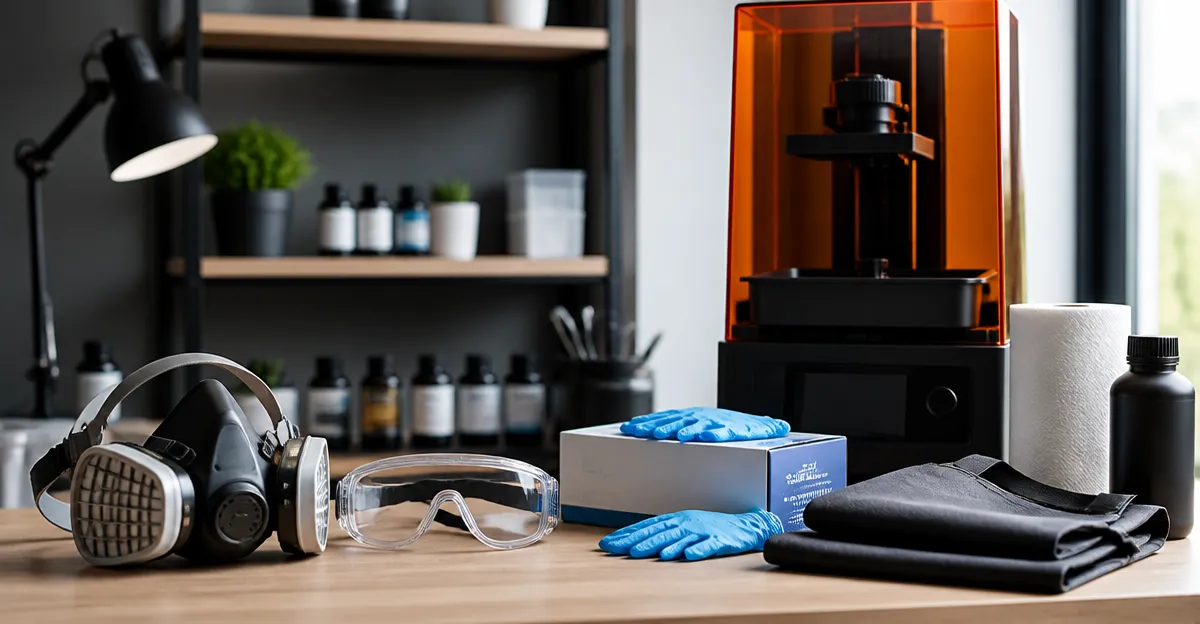
Ultimate Guide: Resin Printing PPE & Safety Checklist for Safe, Clean 3D Prints
Introduction
Resin‑based additive manufacturing offers exceptional detail, but it also introduces chemical and particulate hazards that require disciplined safety practices. This guide explains the personal protective equipment (PPE) and environmental controls essential for protecting health while maintaining print quality. Readers will learn the rationale behind each safety measure, how to select appropriate gloves and enclosures, and actionable tips for daily workflow. By the end of the article, one will possess a complete checklist that transforms a hobbyist’s studio into a professional‑grade workspace.
Background and Context
Photopolymer resins contain acrylate monomers that can cause skin irritation, respiratory sensitisation, and eye damage when exposed to uncured material. During the curing process, volatile organic compounds (VOCs) and ultrafine particles are released, creating an invisible health risk. Proper ventilation, temperature control, and PPE mitigate these risks while also preventing print defects caused by temperature fluctuations or contamination. Understanding the chemistry of resin and the mechanics of 3D printer enclosures forms the foundation for an effective safety strategy.
PPE Essentials for Resin Handling
The first line of defense against resin exposure is high‑quality hand protection. Nitrile gloves provide chemical resistance, puncture durability, and tactile sensitivity required for delicate model manipulation. The Inspire Heavy Duty Black Nitrile Gloves feature a 6‑mil thickness, ASTM D6319 compliance, and textured fingertips for enhanced grip, making them suitable for both medical and industrial tasks. Their latex‑free, powder‑free construction ensures compatibility with sensitive skin and prevents cross‑contamination during post‑processing.
For users seeking a lighter yet still protective option, the Inspire Black Nitrile Disposable Gloves provide a 4.5‑mil barrier, excellent dexterity, and touchscreen compatibility, ideal for fine detail work such as cleaning supports or applying resin. Both glove models carry 4.6‑5.0 star ratings from thousands of reviewers, confirming reliability in real‑world scenarios. Selecting the appropriate glove thickness balances comfort with protection; thicker gloves excel in high‑stress tasks, while thinner gloves enhance precision.
Ventilation and Enclosure Solutions
Effective fume extraction is as critical as hand protection because inhalation of VOCs can lead to chronic respiratory issues. An enclosure that combines a sealed environment with active ventilation isolates fumes and maintains a stable temperature, reducing warping and layer adhesion problems. The DORUNDEA 3D Printer Enclosure Tent incorporates a UV‑blocking window, fire‑resistant fabric, and a three‑layer filter system that captures dust and harmful gases. Users can attach a 12 V fan with speed control to tailor airflow to their specific printer model.
For budget‑conscious makers, the VEVOR 3D Printer Enclosure Tent offers constant temperature regulation, an integrated LED light, and a built‑in ventilation fan, all within a compact frame that fits most LCD resin printers. Its flame‑retardant Oxford cloth and transparent window provide safety and visibility without sacrificing affordability. Meanwhile, the Makacces 3D Printer Enclosure Tent adds a dedicated UV‑shielded brown window and a robust stainless‑steel frame, delivering superior odor extraction and durability for continuous professional use.
Comparison and Selection Guide
| Category | Product | Key Specs | Price (USD) | Rating |
|---|---|---|---|---|
| Heavy‑Duty Gloves | Inspire Heavy Duty Black Nitrile Gloves | 6 mil, ASTM D6319, textured fingertips, latex‑free | 16.14 | 4.7/5 (16,733 reviews) |
| Standard Gloves | Inspire Black Nitrile Disposable Gloves | 4.5 mil, ambidextrous, touchscreen compatible | 9.99 | 4.6/5 (9,644 reviews) |
| Premium Enclosure | DORUNDEA 3D Printer Enclosure Tent | UV‑block window, 3‑layer filter, 12 V fan kit | 64.99 | 4.5/5 (187 reviews) |
| Value Enclosure | VEVOR 3D Printer Enclosure Tent | Constant temperature, LED light, built‑in fan | 42.21 | 4.6/5 (41 reviews) |
| Versatile Enclosure | Makacces 3D Printer Enclosure Tent | Fire‑resistant fabric, adjustable fan, UV brown window | 64.99 | 4.5/5 (44 reviews) |
When choosing gloves, prioritize chemical resistance and fit; thicker gloves are advisable for handling uncured resin in bulk, while thinner gloves excel for intricate support removal. For enclosures, assess printer footprint, desired ventilation capacity, and whether UV protection is required for resin stability. The table above condenses critical data, enabling a quick match between user needs and product capabilities.
Best Practices & Tips
- Always wear nitrile gloves when touching uncured resin; replace them immediately if they become punctured or heavily soiled.
- Work in a well‑ventilated area; supplement enclosure fans with a window exhaust or a dedicated air purifier rated for VOCs.
- Maintain a constant ambient temperature of 20‑25 °C inside the enclosure to reduce resin viscosity fluctuations and improve layer adhesion.
- Use a UV‑blocking window to prevent premature curing while still allowing visual monitoring of the print.
- After each print, clean the build platform with isopropyl alcohol while wearing fresh gloves, and dispose of contaminated gloves in a sealed container.
- Periodically inspect enclosure seals, fan filters, and zipper mechanisms; replace filters according to manufacturer recommendations to sustain airflow efficiency.
- Store resin in a dark, temperature‑controlled cabinet, and label each container with safety data sheet (SDS) information for quick reference.
Frequently Asked Questions
1. Are nitrile gloves sufficient for all resin handling tasks?
Yes, nitrile gloves provide a high level of chemical resistance to most photopolymer resins, but users should select a thickness that matches the task; heavy‑duty gloves are preferable for bulk mixing, while thinner gloves improve tactile feedback during delicate post‑processing.
2. How often should I replace the enclosure fan filter?
Manufacturers generally recommend replacing the filter after 100‑150 printing hours or when airflow noticeably diminishes. For continuous daily use, a quarterly replacement schedule ensures optimal fume capture.
3. Can I use a standard household fan instead of the supplied 12 V fan?
While a household fan can move air, it may not fit the enclosure’s mounting points and could lack speed control. The included 12 V fan is designed for quiet operation and precise airflow, which is essential for maintaining consistent temperature and VOC extraction.
4. Is a UV‑blocking window necessary for all resin printers?
UV‑blocking windows prevent accidental exposure of light‑sensitive resin to ambient UV radiation, which can cause premature curing and surface defects. Enclosures like the DORUNDEA and Makacces models incorporate this feature, making them ideal for printers that operate with open‑top designs.
5. What should I do if I experience skin irritation after glove use?
Immediately remove the gloves, wash the affected area with mild soap, and apply a hypoallergenic moisturizer. If irritation persists, consult a medical professional and consider switching to a different glove brand or thickness.
6. Do I need a separate respirator for resin printing?
In a well‑ventilated enclosure with functional filtration, a respirator is generally unnecessary. However, in poorly ventilated spaces or when printing large volumes, a half‑mask respirator with organic vapor cartridges adds an extra layer of protection.
7. How can I reduce odor without compromising print quality?
Utilize an enclosure with an active ventilation system, such as the Makacces or DORUNDEA tents, and ensure the fan speed is set to achieve adequate air exchange. Adding activated carbon filters to the exhaust line further neutralizes odorous compounds.
Conclusion
Safe resin printing hinges on a disciplined combination of chemical‑resistant PPE, reliable enclosure design, and consistent maintenance routines. By selecting the appropriate gloves—whether the heavy‑duty protection of Inspire Heavy Duty Gloves or the dexterity of Inspire Disposable Gloves—and pairing them with a well‑ventilated enclosure such as the DORUNDEA, VEVOR, or Makacces tents, users can minimize health risks while preserving print fidelity. Implementing the checklist and best‑practice tips outlined in this guide will transform any workspace into a safe, efficient environment for high‑quality resin fabrication.
Products Featured in This Guide
Inspire Heavy Duty Black Nitrile Gloves
Price: $16.14 | Rating: 4.7/5 (16,733 reviews)
Featured for its 6‑mil thickness, ASTM D6319 compliance, and textured fingertips that provide superior protection for both medical and industrial resin handling.
Inspire Black Nitrile Disposable Gloves
Price: $9.99 | Rating: 4.6/5 (9,644 reviews)
Featured for its 4.5‑mil lightweight design, ambidextrous fit, and touchscreen compatibility, ideal for detailed post‑processing tasks.
DORUNDEA 3D Printer Enclosure Tent
Price: $64.99 | Rating: 4.5/5 (187 reviews)
Featured for its UV‑blocking window, three‑layer filtration system, and optional 12 V fan kit that together create a safe, odor‑free printing environment.
VEVOR 3D Printer Enclosure Tent
Price: $42.21 | Rating: 4.6/5 (41 reviews)
Featured for its constant temperature regulation, integrated LED lighting, and built‑in ventilation fan, offering an affordable yet effective safety solution.
Makacces 3D Printer Enclosure Tent
Price: $64.99 | Rating: 4.5/5 (44 reviews)
Featured for its fire‑resistant fabric, adjustable 12 V fan, and UV‑shielded brown window, providing robust odor extraction and durability for continuous use.