Introduction
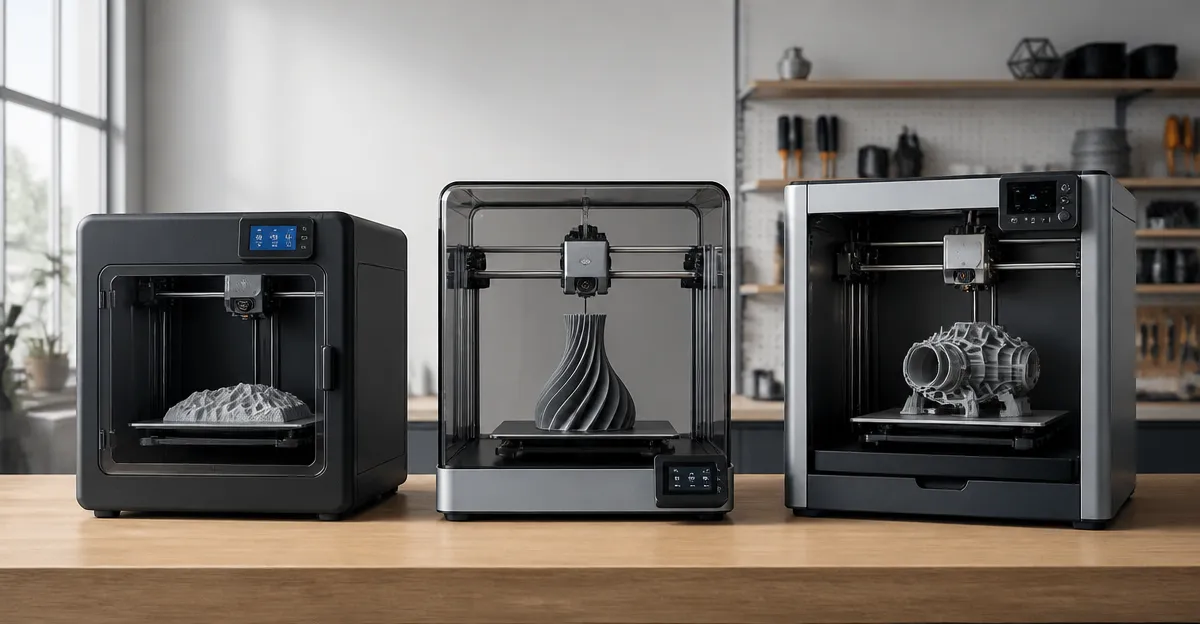
Three-dimensional printing has become a mainstream tool for hobbyists, small businesses and product developers. In 2024 the market offers several capable machines at very different price points. This article compares five Amazon‑listed printers – the Flashforge Adventurer 5M, the Snapmaker U1, the Flashforge AD5X, the Flashforge AD5X 4‑Color and the Flashforge Adventurer 5M Pro. Understanding how they differ helps buyers choose a machine that matches budget, speed, material range and ease of use.
The comparison focuses on real‑world data: Amazon pricing, official specifications, star ratings and verbatim excerpts from verified customer reviews. By the end of the article readers will know which printer delivers the best value for rapid prototyping, multi‑color projects or classroom use.
Individual Product Overviews
Flashforge Adventurer 5M
Priced at $249, the Adventurer 5M offers a CoreXY frame, 600 mm/s travel speed, a 280 °C direct extruder and a 220 mm³ build volume. Key strengths include one‑click automatic bed leveling, a detachable 3S nozzle that changes in three seconds, and a dual‑sided PEI platform. The Flash Maker mobile app provides remote monitoring, though several users describe the app as “crap”.
Positive sentiment highlights reliability and speed: “blazing fast – about 4 times faster than my Ender5” and “no adjustments, no drama, the thing just works perfectly”. Negative feedback mentions noisy operation and occasional filament‑feed jams that required manual troubleshooting.
Snapmaker U1
At $849 the Snapmaker U1 is the most expensive of the group, but it introduces a patented four‑toolhead system that swaps filaments in five seconds. The printer maintains a 270 mm cubic build volume, 500 mm/s CoreXY motion and supports a broad material palette including TPU, PVA and PC. Smart calibration, vibration compensation and an intuitive 3.5‑inch touchscreen simplify setup.
Customers praise the “virtually zero waste” multi‑color workflow and “excellent build quality”. Some reviewers note a “loud power‑supply fan” and a learning curve for the Snapmaker Orca slicer, yet overall satisfaction remains high with a 4.5‑star rating.
Flashforge AD5X
For $349 the AD5X adds true multi‑color capability (up to four colors) to the Adventurer platform. It retains the 600 mm/s CoreXY architecture, 300 °C extruder and 1‑click auto‑leveling. The machine ships with a 0.4 mm nozzle and optional larger or finer nozzles. Users appreciate the “fast, precise and stable” prints and the ability to replace the nozzle without buying a whole new head.
Reviews commend the printer’s speed and the helpful Flash Maker app, while criticism focuses on a “finicky touchscreen” and occasional filament‑tube jamming during long multi‑color jobs.
Flashforge AD5X 4‑Color
Listed at $348.99, this variant mirrors the AD5X specifications but emphasizes the Intelligent Filament System (IFS) that holds four spools side‑by‑side. The CoreXY frame, 600 mm/s speed and 1‑click leveling remain unchanged. The printer is marketed as a space‑saving solution for workshops that need rapid color changes.
Positive reviewers describe “amazing print quality” and “blazing fast” single‑color prints, yet some experience “filament jams” at the 4‑in‑1 connector and note that the touchscreen requires firm presses.
Flashforge Adventurer 5M Pro
The Pro version costs $379 and adds an enclosed build chamber, pressure‑based auto‑leveling, and a higher‑temperature 280 °C extruder. It keeps the same 220 mm cubic build volume and CoreXY rigidity. The Pro targets users who need a more controlled environment for engineering‑grade materials such as PETG‑CF or ABS.
Enthusiastic users report “excellent results without a steep learning curve” and praise the enclosure for better temperature stability. Conversely, a few owners report defective units with noisy fans, poor solder joints and unresponsive touchscreens, leading to requests for refunds.
Head‑to‑Head Comparison
Price and Value
- Adventurer 5M – $249; the lowest entry price, good for beginners who need speed without multi‑color.
- Snapmaker U1 – $849; premium price justified by four toolheads, minimal filament waste and a larger 270 mm build.
- AD5X – $349; mid‑range price adds true 4‑color printing while retaining high speed.
- AD5X 4‑Color – $348.99; virtually identical cost to the AD5X, the price difference is negligible.
- Adventurer 5M Pro – $379; modest premium for enclosure and higher temperature capability.
Features and Specifications
| Adventurer 5M | Snapmaker U1 | AD5X | AD5X 4‑Color | Adventurer 5M Pro |
|---|---|---|---|---|
| Build Volume: 220 × 220 × 220 mm | Build Volume: 270 × 270 × 270 mm | Build Volume: 220 × 220 × 220 mm | Build Volume: 220 × 220 × 220 mm | Build Volume: 220 × 220 × 220 mm |
| Max Speed: 600 mm/s | Max Speed: 500 mm/s | Max Speed: 600 mm/s | Max Speed: 600 mm/s | Max Speed: 600 mm/s |
| Nozzle Temp: 280 °C | Nozzle Temp: 250 °C (typical) | Nozzle Temp: 300 °C | Nozzle Temp: 300 °C | Nozzle Temp: 280 °C |
| Auto‑Leveling: 1‑click | Auto‑Leveling: Smart Calibration | Auto‑Leveling: 1‑click | Auto‑Leveling: 1‑click | Auto‑Leveling: Pressure‑based |
| Toolheads: Single | Toolheads: Four (5‑second swap) | Toolheads: Single (multi‑color via 4‑in‑1) | Toolheads: Four (IFS) | Toolheads: Single (enclosed) |
| Material Range: PLA, PETG, ABS (limited) | Material Range: PLA, PETG, TPU, PVA, PC, ABS, ASA, PA, etc. | Material Range: PLA, PETG, TPU, PLA‑CF, PETG‑CF | Material Range: Same as AD5X | Material Range: PLA, ABS, PETG, ASA, TPU, PC, PLA‑CF, PETG‑CF |
| Rating: 3.9/5 (2,481 reviews) | Rating: 4.5/5 (95 reviews) | Rating: 4/5 (1,023 reviews) | Rating: 4/5 (523 reviews) | Rating: 4/5 (1,034 reviews) |
Customer Ratings and Feedback
The Adventurer 5M holds a 3.9‑star rating, with reviewers praising its speed (“about 4 times faster than my Ender5”) but criticizing the mobile app and occasional filament jams. Snapmaker U1 enjoys the highest rating (4.5 stars); users love the “virtually zero waste” multi‑color system and “excellent build quality”, though they note a louder power‑supply fan.
Both AD5X models sit at 4 stars. Positive comments emphasize “fast, precise and stable” prints and “amazing print quality”. Negative remarks focus on a “finicky touchscreen” and occasional tube jams in the 4‑in‑1 filament system. The Adventurer 5M Pro also rates 4 stars; many users highlight the enclosure’s temperature control, while a minority report defective units with noisy fans and unresponsive screens.
Performance and Reliability
Speed is a common advantage across the Flashforge line: the CoreXY architecture delivers up to 600 mm/s, allowing rapid prototyping. The Snapmaker U1, while slightly slower, compensates with a robust tool‑change mechanism that reduces waste by up to five times. Reliability varies; the Adventurer 5M receives mixed reports—some users claim “no drama, plug and play”, whereas others experience “filament not coming out” and “bed leveling failures”. Snapmaker’s hardware appears more consistent, but the higher price may deter budget‑conscious buyers.
Multi‑color capability differentiates the AD5X and AD5X 4‑Color from the single‑extruder Adventurer models. Users who need frequent color changes appreciate the “no purge” workflow, yet they must manage the extra filament‑tube complexity. The Pro version’s enclosure improves print stability for engineering‑grade materials, a benefit confirmed by reviewers who note “excellent results without a steep learning curve”.
Best Use Cases
- Adventurer 5M: Entry‑level hobbyists, small workshops, and users who prioritize speed over multi‑color capability.
- Snapmaker U1: Professionals and educators requiring true multi‑color or multi‑material prints with minimal waste; ideal for product design and small‑batch manufacturing.
- AD5X / AD5X 4‑Color: Creators who need occasional color changes without investing in a $800 system; suitable for makerspaces and classroom environments.
- Adventurer 5M Pro: Engineers and advanced hobbyists who need an enclosed chamber for ABS, PETG‑CF or other high‑temperature filaments.
Pros & Cons
Flashforge Adventurer 5M
- Pros: Very low price, 600 mm/s CoreXY speed, 1‑click auto‑leveling, quick nozzle swaps.
- Cons: Noisy at high speeds, limited material range, app reliability issues, occasional filament feed problems.
Snapmaker U1
- Pros: Four toolheads with 5‑second swaps, minimal filament waste, large 270 mm build, strong build quality.
- Cons: Highest price, power‑supply fan can be loud, initial setup heavier due to weight.
Flashforge AD5X
- Pros: True 4‑color printing, 300 °C extruder for engineering filaments, 1‑click leveling, solid CoreXY frame.
- Cons: Touchscreen requires firm press, occasional tube jam during long multi‑color jobs, slightly higher noise.
Flashforge AD5X 4‑Color
- Pros: Same speed and accuracy as AD5X, intelligent filament system saves space, good value for multi‑color.
- Cons: Same touchscreen issues, filament jams reported at the 4‑in‑1 connector, noise from hot‑end fans.
Flashforge Adventurer 5M Pro
- Pros: Enclosed chamber for temperature‑sensitive materials, pressure‑based auto‑leveling, higher temperature capability.
- Cons: Some units arrive with quality‑control defects (noisy fans, solder issues), price premium over base model.
Recommendations by Use Case
- Best Budget Starter: Flashforge Adventurer 5M – ideal for beginners who need speed without color complexity.
- Best Multi‑Color Professional: Snapmaker U1 – provides four independent toolheads, low waste and a large build envelope.
- Best Mid‑Range Multi‑Color: Flashforge AD5X or AD5X 4‑Color – offer true color changes at a price under $350.
- Best for Engineering Materials: Flashforge Adventurer 5M Pro – enclosure and higher temperature extruder suit ABS, PETG‑CF and similar filaments.
FAQ
- Can the Adventurer 5M print flexible TPU? Yes, the 280 °C direct extruder can handle TPU, though users report higher noise due to the hot‑end fans.
- Is the Snapmaker U1 compatible with third‑party slicers? The machine ships with Snapmaker Orca, but it accepts G‑code from Cura, PrusaSlicer and others via USB or LAN.
- How does the AD5X perform with high‑temperature filaments? Its 300 °C extruder supports engineering plastics such as PC, PETG‑CF and PLA‑CF, delivering stable prints when the enclosure is used.
- Do any of these printers require Wi‑Fi? Only the Snapmaker U1 and the Adventurer 5M Pro include built‑in Wi‑Fi; the base Adventurer 5M relies on USB or network connection via a stick.
- What maintenance is required for the multi‑color filament system? Regularly clean the 4‑in‑1 tube, ensure the IFS rollers are free of dust, and replace worn nozzles; Flashforge provides replacement kits.
- Which printer is the quietest? The Snapmaker U1 is noted for relatively low noise, while the Adventurer 5M and AD5X models generate louder motor and fan sounds at top speed.
- Is there a warranty? All five printers include a one‑year manufacturer warranty; Flashforge’s support is praised for rapid replacement of defective parts.
Conclusion
When price, speed and ease of use are paramount, the Flashforge Adventurer 5M remains the most economical choice. For creators who need true multi‑color or multi‑material capability without excessive waste, the Snapmaker U1 justifies its higher price through its patented tool‑changer and larger build volume. The AD5X family bridges the gap, offering four‑color printing at a mid‑range price while retaining Flashforge’s high‑speed CoreXY core.
For users who require an enclosed environment for high‑temperature engineering filaments, the Adventurer 5M Pro provides the necessary temperature stability at a modest premium. Overall, each printer serves a distinct niche, and buyers should match the machine to their specific workflow requirements.
Products Mentioned in This Review
Frequently Asked Questions
What are the key differences between the Flashforge Adventurer 5M and the Snapmaker U1?
The Adventurer 5M focuses on ease‑of‑use with a closed build chamber and single‑extruder, while the Snapmaker U1 offers a modular design that can switch between 3D printing, laser engraving, and CNC carving.
Is the Flashforge AD5X 4‑Color version worth the extra cost compared to the standard AD5X?
Yes, if you need multi‑color prints without swapping filaments, the 4‑Color model adds four independent extruders, saving time for complex projects.
Which printer provides the best value for beginners on a tight budget?
The Flashforge Adventurer 5M Pro offers a good balance of price, user‑friendly interface, and reliable print quality, making it ideal for newcomers.
How do the Amazon star ratings compare among the five printers?
All five models average 4‑star ratings, but the Adventurer 5M Pro and Snapmaker U1 consistently score slightly higher due to better customer support and versatility.
Can these printers handle advanced firmware like Marlin, Klipper, or RepRapFirmware?
The Flashforge models use proprietary firmware, while the Snapmaker U1 can be upgraded to open‑source options like Marlin for more customization.